
Guide
Idaho Pasture Pigs: A Pig Bred to Eat Grass
The Idaho Pasture Pig is a composite of Old Berkshire, Duroc and Kunekune, bred in Idaho to graze grass rather than root, and it finishes at 230 to 250 pounds around ten months.
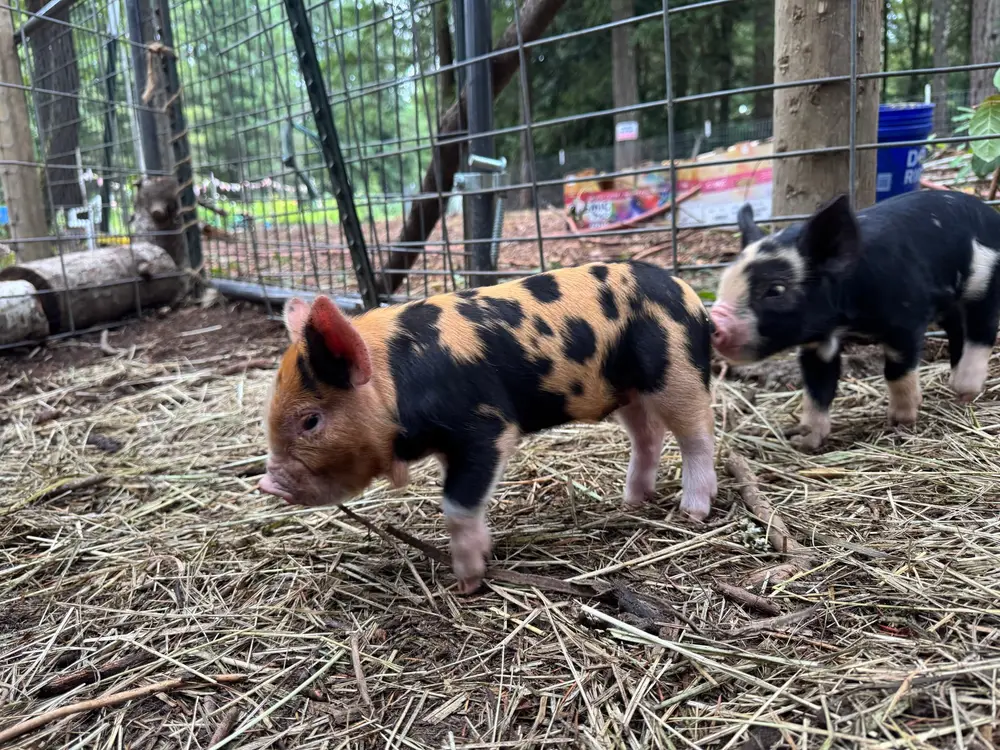
The Idaho Pasture Pig is a composite of Old Berkshire, Duroc and Kunekune, developed by Shelly Farris of Rigby, Idaho, with breeding stock offered publicly from 2012. It was bred to do the one thing most pigs will not do, which is graze grass instead of tearing the ground up to get at what is under it. It finishes around 230 to 250 pounds at about ten months, against roughly 280 pounds at six months for a commercial hog. We raise registered Idaho Pasture Pigs on eight acres in Lakebay, farrow to finish. Here is what the breed is good at and what it costs you.
Where the breed came from
Farris wanted a good tempered, medium sized pig that would graze rather than root. Each parent breed did a job. Kunekune brought the temperament and the short upturned snout, which is the part that makes grazing physically possible. Duroc brought growth rate and body length. Berkshire brought marbling and mothering.
The Idaho Pasture Pig Registry was set up by Jodi and Dave Cronauer, who bought their first breeding trio from the Farris family in 2012 and started the registry after Farris left pig farming.
The snout is the whole breed
A standard pig has a long, straight snout. That is a digging tool, and a long snouted pig turned into a grass field will strip it.
The Idaho Pasture Pig breed standard calls for a medium length snout with an upturn at the end, wide and wrinkled. Long and straight is a disqualification. That shape lets the pig bite grass off at the surface instead of levering it out by the root.
The words in this market are slippery, so be precise. “Pasture raised” tells you where an animal stood, not what it ate, and a lot of pork sold under that phrase is pigs in a field eating corn and soy out of a trough. Grazing is a claim about what the animal does.
How much of the diet can actually come from grass
Not all of it, and anybody who tells you otherwise is selling something.
Pigs are monogastric. They ferment a little fiber in the large intestine and cecum, and Oregon State Extension puts it plainly: pigs cannot live on plants alone. Most pasture grasses run 8 to 11 percent crude protein, and a growing pig needs 13 to 28 percent depending on age.
Breed guidance puts grain and minerals at roughly 10 to 20 percent of an Idaho Pasture Pig’s diet, largely for lysine. Minerals get measured into the feed rather than set out free choice, because pigs will overeat salt and salt toxicity is real.
Our ration is non-GMO with no corn and no soy in it, plus what the hogs find in the woods and hay to fill the gaps. The forage is doing real work here. It is not doing all of it.
Do pasture pigs destroy pasture?
Rooting breeds will. Idaho Pasture Pigs mostly will not, and when they do there is usually a reason.
The Registry’s position is that a pig getting the minerals it needs will not root the way a conventional pig does, and that fresh rooting is the first sign your mineral program is off. Deficiencies in zinc, selenium, copper or iron all show up as digging.
Ground conditions matter as much. Any pig does more damage on saturated ground, and Lakebay gets around 30 inches of rain a year with December the wettest month. Overstock a wet paddock in January and you will get mud, whatever the breed. Oregon State also tells pasture pork producers to expect about half of what is standing in a field to be lost rather than eaten.
So the honest answer is that these are still pigs. They are far easier on grass than a Yorkshire or a Hampshire. They are not a lawn mower.
Here, the rooting is the point
This is where the standard advice does not fit our farm.
Most guidance treats rooting as damage to prevent. Our eight acres came with woodland, not pasture, and we are converting it. The hogs work the understory and turn it over, grass comes in behind them, and then they graze it. The rooting is how the grazing gets made.
That is the actual reason they live in the fir. It is the job, not a photograph, and the ground looks different every year because of it. On the parts that are already grass we move them before they get bored, because that is the ground where rooting would cost us something.
Idaho Pasture Pig vs Kunekune
Kunekune is the obvious alternative if you want a grazing pig. The difference is time.
| Idaho Pasture Pig | Kunekune | |
|---|---|---|
| Butcher age | about 10 months | 12 to 24 months |
| Live weight at butcher | 230 to 250 lb | 180 to 250 lb |
| Mature boar | 350 to 450 lb | over 400 lb at 3 to 4 years |
| Mature sow | 250 to 350 lb | over 300 lb at 4 years |
| Snout | medium, upturned, wide | short, upturned |
| Temperament | aggression disqualifies a pig from breed selection | calm, people friendly |
| Registry | Idaho Pasture Pig Registry | American KuneKune Pig Society |
A Kunekune is not fully grown until three or four years old. If you want a grazing pig and you want pork this year instead of next, that gap is the argument for the Idaho Pasture Pig. If you want the smallest pig on the smallest piece of ground, a Kunekune fits better.
Compared to Berkshire and Duroc
If meat quality is all you want, a Berkshire gives it to you. If growth is all you want, a Duroc gets there faster. Neither will graze.
That is the trade. The Idaho Pasture Pig carries Berkshire and Duroc genetics for meat and growth, and Kunekune genetics for the snout and disposition that let it live on grass. You give up growth rate to get grazing.
The meat
Grass finished Idaho Pasture Pig pork is described consistently as redder than commercial pork, well marbled, with soft fat and a sweeter flavor.
The other side of a forage diet is worth saying out loud. Oregon State notes that flavor and carcass quality vary more on pasture, because the forage varies. A hog finished on June grass and a hog finished on February hay are not the same animal.
The carcass is smaller, and so are the cuts. At 230 to 250 pounds live and a 70 to 73 percent dressing percentage, you are hanging roughly 160 to 180 pounds. A commercial hog at 280 hangs closer to 200.
The downsides, in one place
- Four extra months. Ten months to butcher weight against about six. That is four more months of feed, water, fencing and your time, on an animal that hangs lighter at the end of it.
- A lighter carcass. Roughly 160 to 180 pounds hanging instead of 200. Less meat per pig, smaller cuts, and the price per pound has to carry all of it.
- Smaller litters. Gilts average five to seven piglets and experienced sows eight to ten. Commercial sows run twelve to thirteen. Fewer piglets is easier on the sow and worse on the spreadsheet.
- No commodity outlet. Nobody buys this carcass on a grid. Raise them for meat and you are selling direct, which means you have to do the selling too.
- Heat is harder on them than cold. The heavy coat is why sows can farrow outside in shelter without heat lamps. The same coat makes August work. They need shade and a wallow.
- They are still pigs. Wrong ground, wrong minerals, or too long in one paddock, and they will root.
- The breed is young. Stock has only been in public hands since 2012, which is not long for a three way composite to settle down, and some experienced pig people say so. The Idaho Pasture Pig Registry is the original registry. A separate American Pasture Pig Society was formed in 2022 around a descendant breed with its own herd book and standard. Ask any breeder which papers come with the animal.
What they are like to keep
Temperament is the best thing about them, and it is not a small thing. The breed standard disqualifies aggression outright, breeders walk into pens with mature boars, and sows will farrow without crates and tolerate you being there. Ours farrow outside in shelter, no heat lamps, no crates.
Fencing is electric and training is the whole job. A pig that hits a hot wire drives forward instead of backing off, so they get trained young, around two weeks, in a small area where the fence wins.
Never keep one on its own. Buy two. Build everything heavier than you think you need to, because pigs rub, scratch and lean on all of it.
If you are looking for stock
The Idaho Pasture Pig Registry publishes a registered breeder directory sorted by state. At the time of writing it lists nine breeders in Washington, five in Idaho and three in Oregon, with contact details for each. Check the directory for who is currently listed and breeding, and go see the parents before you put money down on a breed this young.
Our pork
We raise registered Idaho Pasture Pigs farrow to finish, from our own sows and our own boar. Nothing arrives on a trailer at eight weeks. Our hogs go to Windy N in Ellensburg, a USDA inspected plant, under our own label, with first boxes late October.
Boxes are Sampler at $57, Grill at $83 and Farm at $155. /pork has what is in each, /how-we-farm has the feed and the woodland conversion, and /guides/whats-in-a-usda-pork-sampler-box has the cut list. Why USDA matters is /guides/usda-vs-custom-exempt-pork-washington. The stand at 4554 Key Peninsula Hwy NW is open daily, 9am to dusk.