
Guide
Buying local meat on the Key Peninsula and in Pierce County
Some farms here can sell you a pork chop and others can only sell you a live pig, and knowing which is which is most of what you need to buy meat locally.
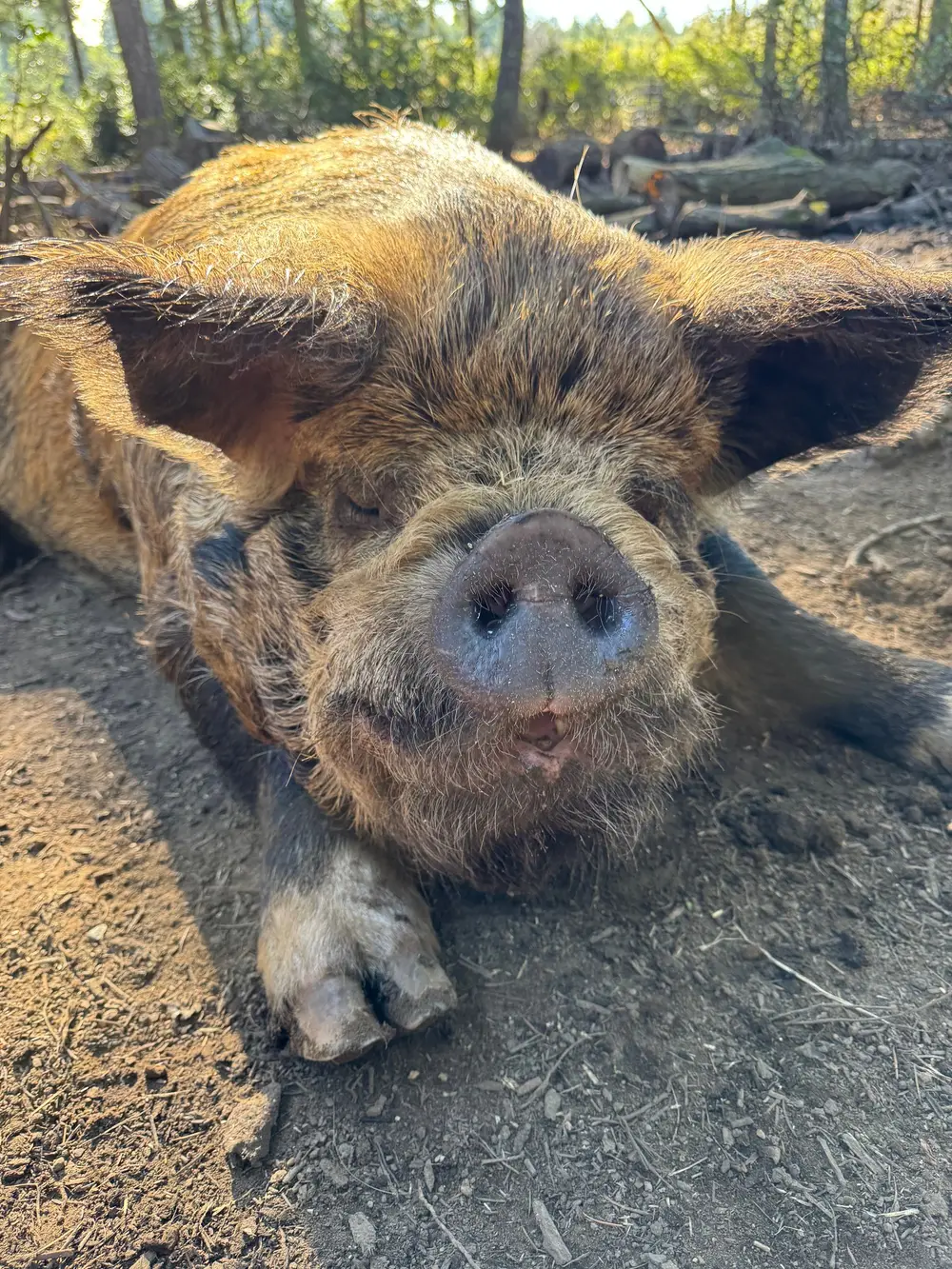
Around here you meet two kinds of meat farm. One sells you two pounds of bacon. The other sells you a live pig and sends you to a butcher to collect it. Both are legal, and the difference is inspection: meat sold by the cut must come from a USDA inspected plant, while meat from a custom exempt plant can only go home with whoever owned the animal before it was killed. That one rule explains most of the rest.
Why one farm sells a chop and the next one sells a pig
Washington’s custom exemption lets a farm sell you an animal while it is alive and then have it processed for you at an uninspected plant. WSDA is blunt about the limit: “Selling meat by the piece or cut is not allowed under the Custom Meat exemption.” The meat is for the owner’s household only, and every package comes back marked not for sale.
USDA inspection removes all of that. Inspected meat can be sold by the package, at a stand, at a market, to a restaurant, and across state lines. The long version is in our guide to USDA and custom exempt pork in Washington.
So a farm offering only halves is not being cagey. It is telling you which plant it uses. Our own hogs go over Snoqualmie Pass to Windy N in Ellensburg and come back as labelled packages, and that drive is worth remembering before you judge a neighbour for selling live animals instead.
What a half hog actually is
A half hog is one side of one animal, cut and wrapped to your instructions. You are buying a share of a specific pig, not a quantity of meat, which is why the weight is not fixed on the day you pay.
The cuts also come off in set proportions. University of Maine Extension puts ham at about 18 percent of live weight and loin at 16, so you cannot order a half hog that is mostly bacon.
Hanging weight is not what you take home
This is where people get caught, and almost nobody explains it before the invoice lands.
There are three weights. Live weight is the animal on the scale. Hanging weight, also called carcass or dressed weight, is what is left after the head, hide, blood and organs come off. Packaged weight is what goes in your freezer once bone, fat and trim are taken out at cutting.
Nearly every farm prices on hanging weight, and you will not take home hanging weight.
Washington State University ran three hogs through fabrication and measured dressing percentages of 64.1, 68.4 and 71.9, the lowest being a heritage Large Black. From the carcass, WSU puts take-home at “about 75% of the carcass weight, in mostly bone-in meat cuts” and about 65 percent boned out. University of Wisconsin Extension lands in the same place.
Worked through on a hog finishing at 250 pounds live, at 68 percent dressing and 70 percent yield:
| Stage | Whole hog | Your half |
|---|---|---|
| Live weight | 250 lb | n/a |
| Hanging weight, about 68% of live | 170 lb | 85 lb |
| Packaged weight, about 70% of hanging | 119 lb | 60 lb |
Now the part that surprises people. If the farm quotes $6.50 a hanging pound with cut and wrap included, your half costs about $552 and you carry home about 60 pounds. That is $9.20 a pound of actual pork, not $6.50. Nobody is cheating you. It is a different denominator.
Two things push it further than the chart suggests. Heritage and grazing breeds dress lighter than the commercial hog most online calculators assume, so the same live weight gives you less. And bacon and hams lose weight again in smoking. Take the low end of any estimate.
What it costs, all in
Two pricing models. Know which one you are being quoted.
All in, per hanging pound. One price covers the animal and the butchery. Washington farms publishing prices online in August 2026 sat between about $6.50 and $9.00 a hanging pound. On the 85 pound half above, roughly $550 to $765.
Animal plus processing. The farm quotes the animal, you settle with the plant yourself. Washington processors publishing rates listed hog slaughter around $95 to $175 a head, cut and wrap around $1.05 to $1.10 a pound of hanging weight, and curing and smoking around $1.20 to $1.50 a pound on the weight smoked. On a half that is near $165 to $220 in processing before you have paid for the pig.
Published figures, not quotes. Get current ones from the farm and the plant.
Freezer space, and how long it lasts
Oklahoma State Extension’s rule of thumb is one cubic foot of freezer for every 35 to 40 pounds of cut and wrapped meat. So 60 pounds of pork is under two cubic feet and a small chest freezer handles a half hog easily. A whole hog at around 120 pounds wants three to four.
USDA’s Economic Research Service projects per person pork availability at 50.9 pounds for 2026. Availability is not the same as eaten, but it is the right size of number. Divide take-home weight by 50 pounds a person a year: 60 pounds is about a year for one committed pork eater, or four to five months for a household of three.
The deposit, and why it exists
The deposit is not just a hold on your place in the queue. Under the custom exemption you have to own the animal before it is slaughtered, and WSDA states that “transfer of ownership of any portion of custom carcass after slaughter is illegal.” The deposit is what makes the sale legal.
Washington farms publishing deposits listed roughly $200 to $500 depending on share size. Expect months rather than weeks before the freezer: the farm books a kill date, the animal has to reach weight, and pork gets cut on the plant’s calendar. Ask for the kill date and the pickup window before you pay.
Buying by the box or the cut instead
If you do not want 60 pounds at once, buy inspected meat. A box, or a single package of bacon, can only be sold to you if the animal went through a USDA plant, so this route filters itself.
Look for the mark of inspection and the establishment number printed on the package. That is the whole test. Bright Ide Acres in Orting, for one, sells pasture raised pork both by the cut and by the half.
What to ask before you pay
- What did it eat? Ask for the ration, not the adjective. Pasture raised describes where an animal stood, not what was in the trough.
- Did you raise it from birth, or buy it in? Most farms selling pasture pork buy weaner pigs at eight to ten weeks. Nothing wrong with that, but the first two months happened somewhere the farm cannot tell you much about.
- Which plant processed it, and is it inspected? USDA, WSDA or custom exempt. A straight answer tells you more than any label, and you can check the package yourself afterwards.
- Price per pound of what? Hanging weight or packaged weight. Make them say the words. Then ask who pays the plant, and what it charges for smoking and sausage.
- What is the estimated hanging weight, and what if it misses? Get the range and the policy in advance, and ask for help with the cut sheet. Most first timers go too boneless and regret it.
Where to look around here
Directories. The Washington State Beef Commission’s local beef directory has a county dropdown. Its Pierce County entries currently include AA Meats in Lakewood, Butcher Boys in Puyallup, Dave’s Meat and Produce, Melody Meats and Mt View Meat and Sausage in Tacoma, Double T Meats in Eatonville, and Harlow Cattle Company in Spanaway. Eat Local First’s Washington Food and Farm Finder covers the South Sound: Lewis, Mason, Pierce and Thurston.
On the peninsula. Kaukiki Farm in Longbranch raises grass fed beef and lamb, and our farm stands roundup covers the rest. The Key Peninsula Farm Tour, run by the Key Peninsula Farm Council, is the oldest farm tour in Pierce County and happens in early autumn. The one weekend a year you can meet most of the growers out here. Check kpfarmtour.com for this year’s date.
Markets. The Washington State Farmers Market Association keeps the current directory of markets, days and seasons. Check that rather than any blog, this one included. Call before you drive, because these are small operations and hours move.
Where we fit
Wildwood Hollow is one of the options above, not a replacement. Our hogs go through Windy N under our own label, first boxes late October.
Registered Idaho Pasture Pigs, born here out of our own sows and our own boar, on a non-GMO ration with no corn and no soy, plus forest forage and hay. They are a grazing breed, so grass is food rather than bedding, and the rooting is how we make more grazing.
Because it is USDA inspected we sell it by the box rather than by the animal: Sampler $57, Grill $83, Farm $155. No deposit, no cut sheet, no half a pig on your kitchen floor. More on our pork and how we farm. The stand at 4554 Key Peninsula Hwy NW in Lakebay is open daily, 9am to dusk.